
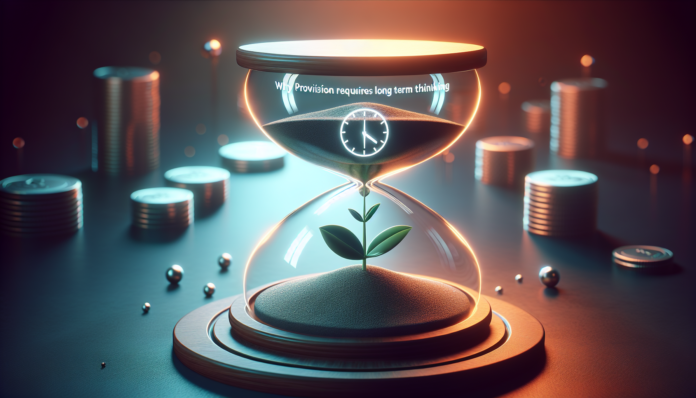

Why Provision Requires Long-Term Thinking
Provisioning is the process of ensuring that resources are adequately supplied for future needs. While it might seem simple, it requires a deep commitment to long-term thinking. In today’s fast-paced world, many organizations focus on short-term gains. However, true sustainability and resilience depend on how we think about and prepare for the future.
The Importance of Long-Term Thinking in Provisioning
Long-term thinking in provisioning goes beyond immediate needs. It requires an understanding of future trends, risks, and the evolving landscape of resources. By planning adequately, businesses can navigate uncertainties and align their provisioning strategies with their core goals.
Key Benefits of Long-Term Provisioning
- Sustainability: Planning for the future ensures that resources last over time. This is crucial for both businesses and the environment.
- Cost Efficiency: Past experiences show that long-term investment can lead to significant savings. Companies can prevent last-minute rushes that often lead to overpriced resources.
- Adaptability: Businesses that think long-term can adapt better to changing circumstances. They can anticipate resource shortages or surpluses, allowing for strategic adjustments.
- Competitive Edge: Organizations that embrace long-term provisioning can offer consistent products or services, which builds customer loyalty and trust.
Understanding the Provisions Landscape
To effectively plan for the future, one must recognize the various factors influencing provisioning. These can include economic trends, technological advancements, and environmental changes.
Factors Influencing Long-Term Provisioning
- Market Trends: Monitoring shifts in consumer demand helps in better forecasting needs.
- Technological Advances: Keeping up with innovations ensures that provisioning strategies remain effective and relevant.
- Regulatory Changes: Laws and regulations can impact resource availability and cost. Understanding these helps in compliance and risk management.
- Environmental Impact: Acknowledging the ecological footprint of resources can lead to more sustainable practices.
Strategies for Effective Long-Term Provisioning
Navigating long-term provisioning requires a clear strategy. Here are effective approaches to consider:
Develop a Clear Vision
- Define what long-term success looks like for your organization.
- Align provisioning goals with your overall mission to ensure consistency.
Invest in Research and Analysis
- Utilize data analytics to gain insights into future resource needs.
- Regularly evaluate and adjust your provisioning strategies based on evolving trends.
Collaborate with Stakeholders
- Engage suppliers, customers, and industry experts in the planning process.
- Foster mutually beneficial relationships that support long-term goals.
Monitor and Evaluate Progress
- Set key performance indicators (KPIs) to track the effectiveness of provisioning strategies.
- Periodically review performance to adapt to new challenges or opportunities.
The Role of Technology in Long-Term Provisioning
Technology plays a vital role in enhancing the provisioning process. Advanced tools can optimize resource management and improve forecasting accuracy.
Tools for Long-Term Planning
- Data Management Systems: Streamline data collection and analysis for better decision-making.
- Supply Chain Management Software: Automate and optimize inventory levels.
- Predictive Analytics: Use historical data to forecast future trends effectively.
Conclusion: Navigating the Future of Provisioning
In conclusion, the practice of provisioning requires thoughtful long-term thinking. Organizations that adopt this mindset will see numerous benefits, from sustainability to improved adaptability.
By investing in strategies that prioritize the future, companies can secure their place in an ever-evolving marketplace. Long-term provisioning not only prepares businesses for challenges but also positions them for lasting success. Embrace the need to think ahead, and your organization will be better equipped to thrive in the future. Planning today is the foundation for a prosperous tomorrow.